


How GMMCO is creating value across the equipment lifecycle
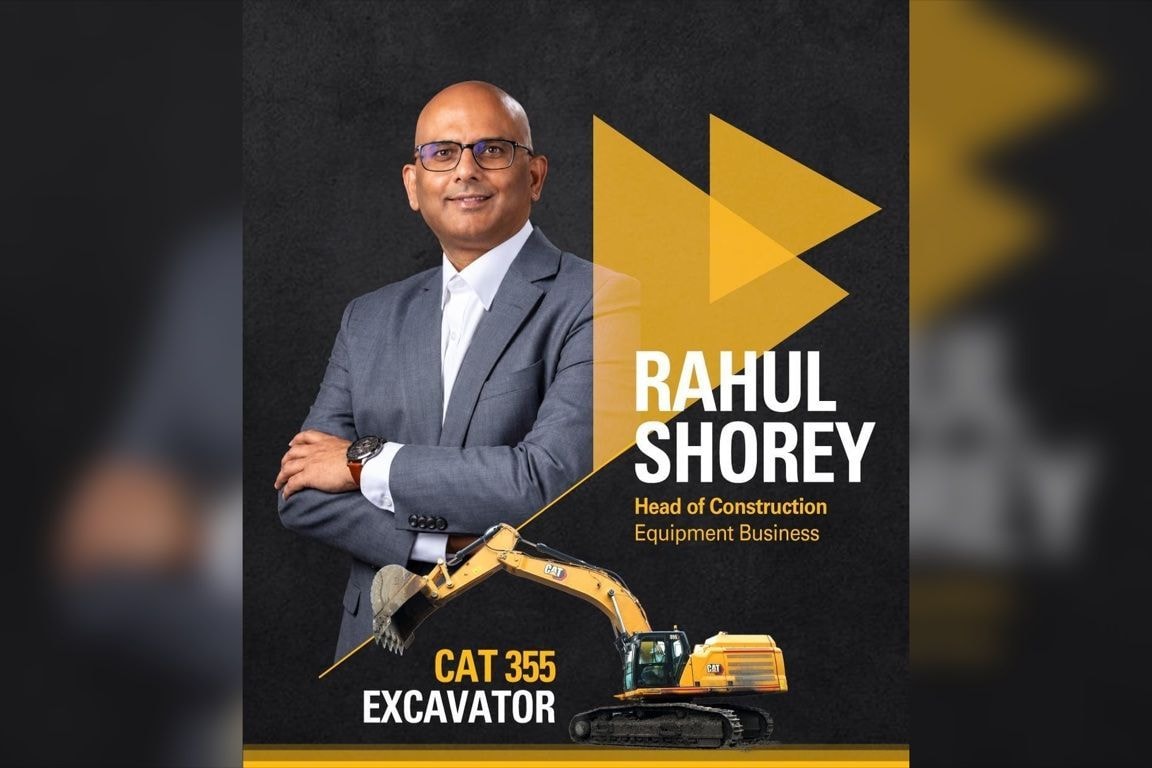
Equipment procurement is increasingly being evaluated not only on acquisition cost, but on productivity, uptime, service support and operating economics across a machine’s lifecycle. In an interaction with B2B Purchase, Rahul Shorey, Head – Construction Equipment, GMMCO, explains how financing, operator training, connected assets, service support and rebuild solutions can help construction and mining contractors improve equipment utilisation and meet project commitments.
What was the focus of GMMCO’s showcase at bauma CONEXPO INDIA?
At bauma CONEXPO INDIA, we presented a comprehensive portfolio from GMMCO and Caterpillar, including the new Cat® 355 Hydraulic Excavator, Cat D5 Dozer and Cat 120 GC Motor Grader, catering to applications across quarrying, mining, heavy infrastructure and road construction. Visitors could also explore a rebuilt machine, digital solutions and rental offerings within the same pavilion.
The objective was to demonstrate that our relationship with customers extends well beyond supplying equipment. Whether a customer is looking to purchase a new machine, extend the productive life of an existing asset, improve fleet visibility or explore alternate ownership models, GMMCO can support those requirements across the equipment lifecycle.
How do these solutions help contractors manage total cost of ownership?
Total cost of ownership begins from the day a customer acquires a machine and continues throughout its productive life. We support customers at the acquisition stage through Cat Finance, with financing options and repayment structures designed around individual business requirements. Customer Value Agreements and service contracts can also help provide greater predictability around maintenance and operating costs.
The same lifecycle approach extends to the machine’s second life. After several years of operation, customers can evaluate whether rebuilding a Caterpillar machine is commercially more appropriate than replacing it. With dedicated workshops and Cat-certified rebuild capabilities, we help customers assess these options and maximise the productive value of their assets. Ultimately, the objective is to improve lifecycle economics rather than look at equipment cost only at the point of purchase.
How should equipment selection reflect project requirements?
Equipment selection has to begin with a clear understanding of the customer’s work order and operating requirements. We consider factors such as the volume of material to be moved, expected operating hours, project duration, site conditions and the specific application—whether it involves excavation, earthmoving, quarrying, road construction or material handling.
Our sales teams therefore need to understand the project before recommending a machine. The role is not simply to sell equipment, but to work with the customer to identify the right configuration and support structure required to deliver the desired output. That solution-based approach becomes particularly important when customers are working against defined production targets and project timelines.
What role does operator training play in improving performance?
Operator capability has a direct impact on productivity, fuel efficiency, machine health and overall equipment performance. Operator training is therefore an important part of our customer onboarding process. After a machine is commissioned, certified trainers visit the customer site and provide hands-on guidance on machine features, recommended operating practices and the effective use of the equipment in actual site conditions.
This ensures that the engagement does not end with machine delivery. Customers receive practical support from the beginning so that operators can use the equipment effectively and understand the features available to them. The engagement continues through refresher programmes conducted by our service and aftermarket teams at customer sites, training centres, branches and regional locations.
How is digital connectivity changing fleet management?
We have nearly 19,000 connected assets linked through VisionLink, giving customers access to important machine information such as operating hours, fuel consumption, alerts and equipment status. As more assets become connected, digitalisation is enabling us to become increasingly proactive in the way we support customers.
Connectivity helps both the customer and our teams identify issues earlier. When a machine generates an alert, the relevant information can be reviewed and communicated quickly, enabling faster intervention where required. An important part of customer onboarding is therefore not only providing access to digital platforms, but also helping customers understand how to use the information available to them.
The real value of connectivity comes when data is translated into operating decisions—whether that relates to utilisation, fuel consumption, maintenance planning or responding to machine alerts.
Can older machines also join a connected fleet?
Yes. Connectivity is not restricted to new machines. Older assets can also be retrofitted with a connectivity device and brought onto the digital fleet management platform. This allows customers to view older and newer machines within the same ecosystem and gain better visibility across a mixed-age fleet.
How does service support help protect project schedules?
For a contractor, machine uptime is closely linked to project delivery. That makes service support as important as the equipment itself. Under GMMCO’s Service Commitment 2.0, we have defined service commitments around machine restoration and parts availability under applicable service agreements, including restoring machines within 48 hours and making parts available within 24 hours at the nearest outlet.
Delivering this requires significant planning behind the scenes—from stocking the right parts and positioning service engineers to maintaining a strong service network. For mining customers operating under customised service agreements, we can also plan parts inventory at site depending on operating requirements. The objective is to enable customers to focus on equipment utilisation and project execution while we manage the agreed service responsibilities that support machine availability.
What will drive the next improvement in equipment economics?
Productivity and fuel efficiency will continue to be fundamental to equipment economics. Faster cycle times, the right equipment configuration, appropriate reach and digging depth, improved utilisation and reduced downtime can all contribute to higher output over the life of a machine. Digital services will become increasingly important as well. Customers expect greater convenience and visibility—whether that means ordering parts digitally, monitoring equipment remotely or receiving actionable operating information.
Our responsibility is to make these technologies practical and relevant to the customer. Ultimately, the next improvement in equipment economics will come from bringing the machine, operator, data, service support and lifecycle solutions together so that customers can achieve higher productivity, better uptime and greater value from their equipment investment.
Rahul Shorey
Head of Construction, Equipment Business
GMMCO Ltd (A CKA Birla Group company)
Originally published on
B2B Purchase


